

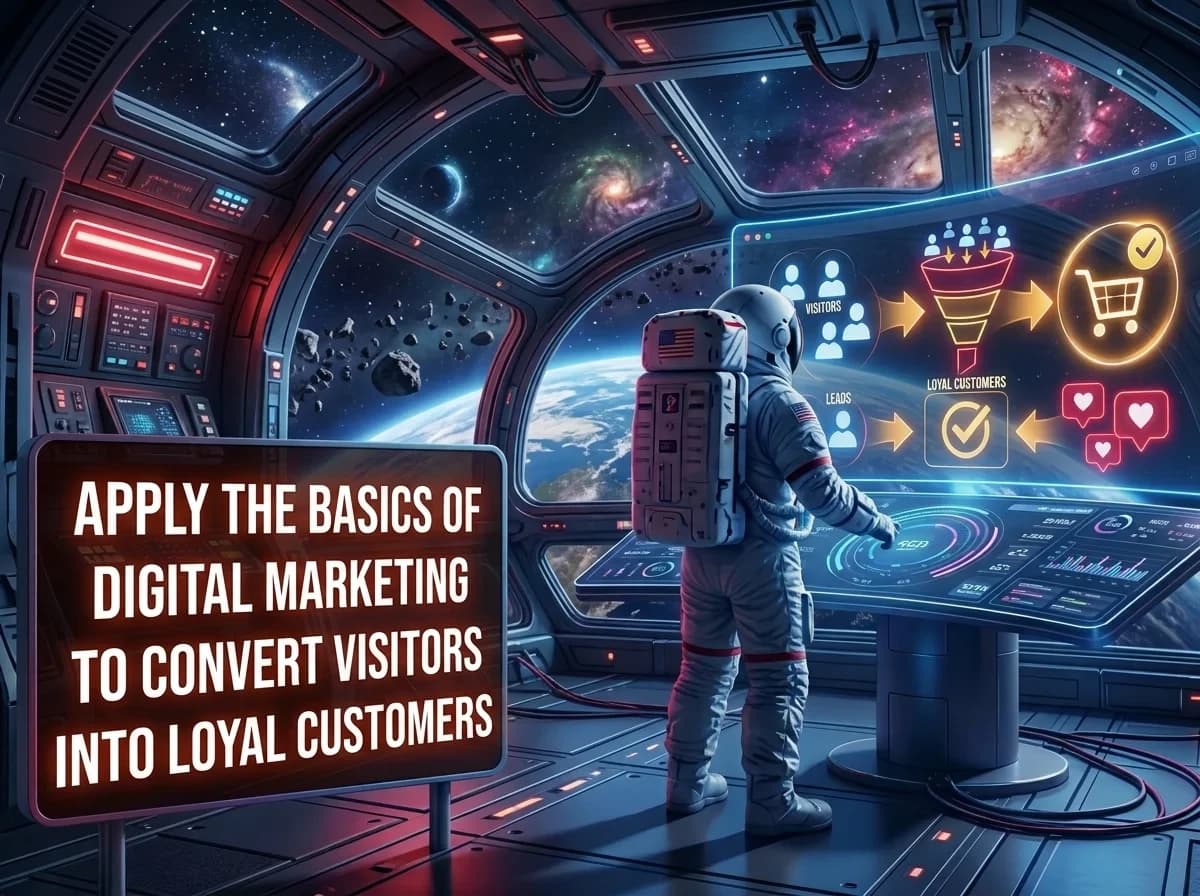
Your business may succeed in attracting thousands of visitors to its website and social media pages, but this does not necessarily mean increased sales or a growing base of loyal customers. The real value of digital marketing does not stop when people discover your brand. It begins when their interest turns into an inquiry or purchase, and continues when you provide an experience that encourages them to return.
To achieve this, you need to apply digital marketing fundamentals as an integrated system that starts with understanding your audience and choosing the right channels, continues with improving the user experience and conversion rate, and ends with building long-term customer relationships. Here are the key steps to help you implement this system effectively.
What Digital Marketing Fundamentals Does Your Business Need?
Digital marketing is the use of online channels and platforms to promote a brand, communicate with an audience, and achieve business objectives, such as increasing sales or generating leads. Its success does not depend on using the largest possible number of platforms, but on selecting activities that suit your business and your customers' behavior.
Some of the most important fundamentals include:
Identifying your target audience: Understanding who needs your products or services, their interests and challenges, and how they search for solutions.
Building a clear brand identity and message: Explaining what makes your brand different and what value it offers customers.
Choosing the right channels: Such as search engine optimization (SEO), social media platforms, paid advertising, and content marketing.
Developing an effective website: Providing information clearly, working efficiently on mobile devices, and guiding visitors toward the desired action.
Measuring performance: Monitoring results and analyzing data to identify the activities that attract qualified leads and generate a suitable return.
These elements work together. An advertisement may attract a visitor, but an unclear website may cause them to leave. Valuable content may build trust, but a lack of follow-up can result in a lost sales opportunity.
How Can You Turn Website Visitors into Actual Customers?
Converting visitors into customers requires understanding the steps they take before making a purchase decision, then removing the obstacles that prevent them from moving forward.
1. Understand Your Audience and the Customer Journey
Start by identifying customers' needs and the questions they ask before making a purchase. Do not assume that every visitor is ready to request your service immediately. Some visitors are looking for information, others are comparing alternatives, while a third group is ready to make a decision.
The customer journey can be divided into three stages:
Awareness Stage: The person identifies a problem or need and starts searching for information and solutions.
Consideration Stage: The person compares options, prices, and features, looking for reasons to trust your brand.
Decision Stage: The person is ready to make a purchase, request a quote, or contact your sales team.
When you understand these stages, you can provide relevant content for each one instead of using a single sales message for all visitors.
2. Attract the Right Audience Through Digital Channels
Increasing website traffic is not an independent goal. What matters most is attracting people who have a genuine interest in what you offer. Therefore, choose your channels based on your audience and business objectives.
Search Engine Optimization (SEO): Helps customers who are already searching for your products or services find your website through relevant content and pages that address their needs.
Social Media Management: Strengthens brand presence and allows you to publish content, engage with your audience, and build trust over time.
Paid Advertising: Helps you reach specific audience segments and promote offers or services while monitoring customer acquisition costs and campaign results.
Content Marketing and Media Production: Provide information and explain the value of your products or services through articles, images, and videos.
For example, a web design company can attract potential customers through an article explaining how to choose the right website, then use a clear service page and targeted advertisement to encourage interested visitors to request a consultation.
3. Optimize Your Website and Landing Pages
Once visitors arrive, they should quickly understand what you offer and why it is right for them. Make sure your page includes a clear headline, a description of the benefits, information that supports decision-making, and an easy way to contact you or make a purchase.
Key elements of user experience optimization include:
Fast page loading and easy navigation on mobile devices.
Well-organized content and headings that make information easy to find.
Clear presentation of services, products, prices, or ordering details.
Visible contact options and clear purchase or return policies, where applicable.
Reducing unnecessary fields and steps in contact forms and checkout processes.
Your advertisement or search result message should also match the content of the landing page. If an advertisement promises a specific offer, visitors should find the details of that same offer after clicking, rather than landing on a general page that does not meet their expectations.
4. Use a Clear Call to Action (CTA)
Visitors may be convinced by what you offer but still not know what to do next. This is where a Call to Action (CTA) comes in, using phrases such as Request a Quote, Book a Consultation, Contact Us, or Buy Now.
Choose the CTA according to the page's objective and the customer's stage in the buying journey. A visitor who is still comparing options may respond better to a guide or an initial consultation, while a direct purchase button may be more suitable for someone who knows the product and is ready to make a decision.
Do not simply add a button. Make sure it is visible, easy to use, and that the page explains what will happen after the visitor clicks it.
How Can You Retain Customers and Turn Them into Loyal Customers?
Securing the first purchase is not the end of marketing. Customer retention requires a positive experience, relevant communication, and value that encourages customers to choose your brand again.
1. Follow Up with Customers After Purchase
Make sure the order has arrived or the service has been delivered as agreed, and provide usage instructions or support when needed. If a customer has submitted an inquiry but has not made a purchase yet, follow up with an appropriate message without being pushy or sending repetitive, unwanted communications.
2. Personalize Communication and Offers
Use the information customers share with you responsibly to understand their interests and provide more relevant content or offers. A customer who purchased a particular product may be interested in complementary products, while another may need tips to get the most out of their purchase.
3. Focus on Customer Service and Collect Feedback
Easy communication, prompt responses, and effective complaint resolution all influence the customer experience and level of trust. Ask for feedback after delivering a service or completing an order, then use it to identify recurring problems and improve the experience.
4. Encourage Repeat Purchases and Customer Loyalty
You can use points programs, repeat-customer rewards, or personalized offers, provided they suit your business and do not turn into constant discounts that reduce the perceived value of your products. The goal is to give customers a genuine reason to return, not simply to push them into making another purchase by any means.
How Do You Measure the Success of Your Digital Marketing Strategy?
You cannot improve what you do not measure. Therefore, define performance indicators that align with your business objectives rather than focusing only on website visits or follower counts.
Some of the most important metrics include:
Conversion Rate: The percentage of visitors or sessions that complete the desired action, such as making a purchase or submitting a form.
Customer Acquisition Cost (CAC): The average cost of acquiring a new customer, based on your calculation method and available data.
Return on Ad Spend (ROAS): The revenue attributed to advertising compared with advertising expenditure.
Repeat Purchase Rate: The percentage of customers who return to make additional purchases within a specified period.
Customer Retention Rate: The percentage of customers who continue doing business with your company during the measurement period.
Customer Lifetime Value (CLV): An estimate of the value a customer generates for your business throughout the relationship.
You can use Google Analytics 4 to track important events, such as contact form submissions or completed purchases, and analyze the performance of landing pages and different channels. Customer Relationship Management (CRM) systems also help you manage leads, sales opportunities, and post-purchase communication.
Most importantly, compare your results with previous periods and your business objectives, and test specific improvements before implementing them more widely. There is no single ideal conversion rate for every business. Results vary depending on the industry, traffic source, product, and buying cycle.
Start Building an Integrated Digital Marketing Strategy with TREE
Turning visitors into loyal customers requires an integrated approach that connects content, brand identity, websites, advertising, and performance analysis. TREE Marketing offers services that include social media management, search engine optimization, website and app development, media production, brand identity, advertising, and media buying.
If you want to strengthen your business's digital presence and align your marketing channels with clear objectives, you can contact the TREE team to discuss your business needs and request a suitable proposal.
Frequently Asked Questions
What Is the Difference Between Digital Marketing and Online Marketing?
Both terms are commonly used to describe marketing activities carried out through digital channels, such as search engines, websites, social media platforms, and online advertising. Their usage may vary between organizations, but both aim to reach audiences and achieve marketing objectives through digital media.
Does Increasing Website Traffic Mean More Sales?
No. Website traffic may increase without generating more sales if the audience is not relevant, the page does not communicate the product's value, or users experience difficulties when trying to purchase or get in touch. Therefore, you should measure traffic quality and conversion rates alongside visitor numbers.
What Is the Most Important Digital Channel for Acquiring New Customers?
There is no single channel that suits every business. The right choice depends on the audience, product, budget, and buying cycle. SEO may be suitable for people searching for solutions, while paid advertising helps you reach a specific audience quickly, and social media supports relationship-building with your audience.
How Can I Retain Customers After Their First Purchase?
By providing a positive experience, following up after the sale, making customer service accessible, listening to feedback, and offering content or promotions that match their needs. Communication should be useful and non-intrusive to maintain a lasting relationship with your brand.
Conclusion
Applying digital marketing fundamentals does not simply mean publishing content or running advertisements. It means building an integrated customer journey that starts with attracting the right audience, continues by providing an experience that encourages purchases, and is sustained through good service and communication that maintains customer trust.
Start by defining clear objectives and measurable KPIs, then optimize your channels and pages based on actual customer behavior. This way, digital marketing becomes a tool for supporting sustainable growth rather than simply increasing website traffic.